Clinical Corner: Microprocessor-Controlled Knees (MPKs)
Cascade Orthopedics Supply Clinical Report, 2025
Written by Leslie Jackson, MSS, CP, Cascade & OrtoPed Clinical Specialist
How Microprocessor Knees Support Aging Amputees: Stability, Confidence & Smarter Mobility
For older adults with limb loss, mobility challenges often compound over time. Muscle weakness, reduced balance, slower reaction times, and joint changes can make walking more difficult especially with traditional mechanical knees. This is where microprocessor controlled knees (MPKs) are transforming the landscape of aging amputee care.
MPKs use sensors, algorithms, and automated hydraulic, pneumatic or magnetorheologic (MR) control to adjust resistance in real time. Instead of relying solely on a user’s timing and muscular effort, the knee actively helps maintain stability, especially during unexpected events. For older adults, this can mean fewer stumbles, more confidence, and the ability to walk more naturally on uneven ground.
Among today’s MPK options, five models stand out for features particularly beneficial to aging amputees:
Each knee offers unique advantages, but all share characteristics that strongly support safety, confidence, and quality of life for older users.
Why Aging Amputees Benefit More From MPKs Than Any Other Age Group:
As we age, physical and cognitive changes influence prosthetic function:
- Slower reaction times increase fall risk when a toe catches or terrain changes suddenly.
- Reduced muscle strength means less ability to stabilize a mechanical knee at heel strike.
- Balance decline affects dynamic stability through the gait cycle.
- Fear of falling limits community engagement and creates a cycle of inactivity.
- Cognitive load becomes more important—older adults benefit from systems that are more intuitive and responsive.
MPKs directly address these challenges through stumble recovery, adaptive stance control, automatic terrain adjustments, and smooth stability transitions.
How the Five Featured MPKs Support Aging Users:
1. Rheo – Össur
Smooth, Predictive Stability for Low to High Community Ambulators
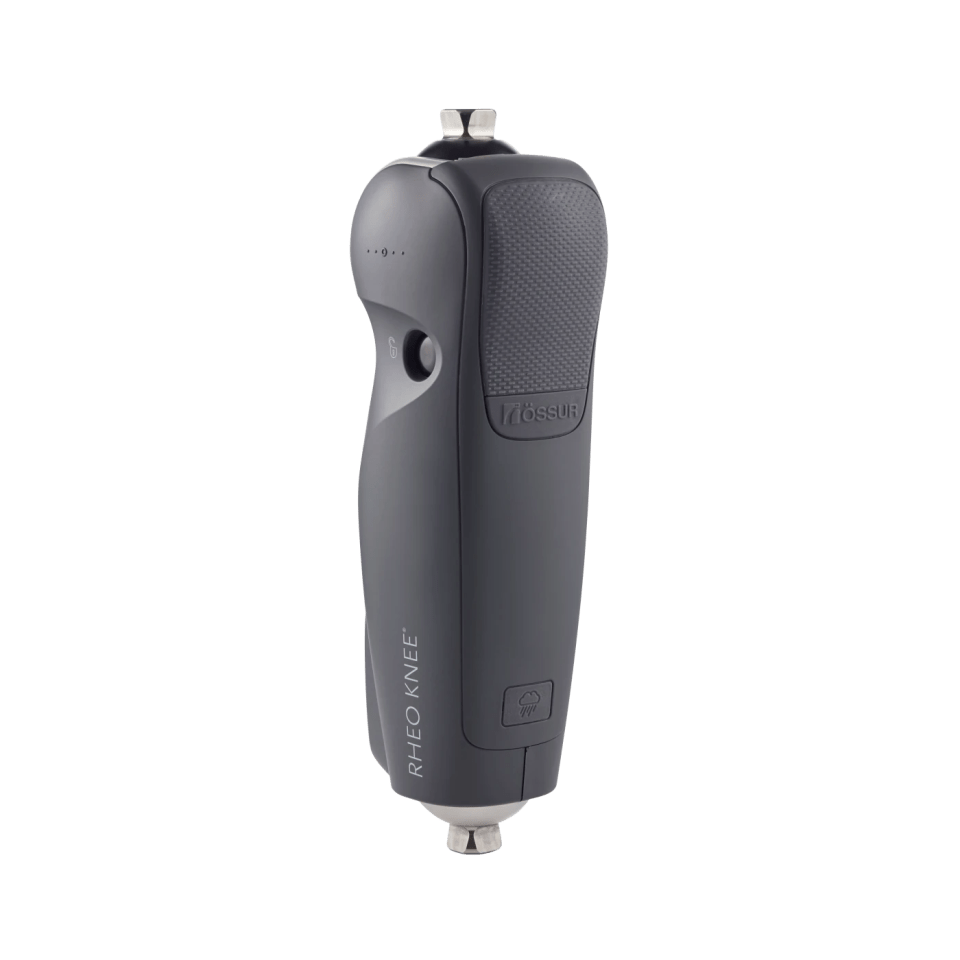
The Rheo uses magnetorheologic fluid (MRF), which thickens instantly in response to magnetic fields, allowing the knee to adjust resistance extremely quickly and smoothly. This creates a natural, fluid gait—ideal for aging users who need dependable stability without sudden or hard mechanical transitions.
Key Aging-Friendly Features
- Adaptive stance control supports confident heel loading even when balance or gait timing varies.
- Highly responsive stumble recovery helps catch the user when gait becomes irregular.
- Weather resistance allows worry-free outdoor use—important for older adults who walk in varied climates.
- Guided specific K2 level adjustments in Össur Logic
Why It Works Well for Older Adults
The Rheo predictive behavior reduces the cognitive effort required to walk safely. Many aging amputees describe the feel as “natural,” “quiet,” and “forgiving,” improving their confidence on real-world surfaces.
2. Kneuro – BrainRobotics
High Stability + Rugged Durability + Exceptional Weight Capacity + Broad Functional Capacity
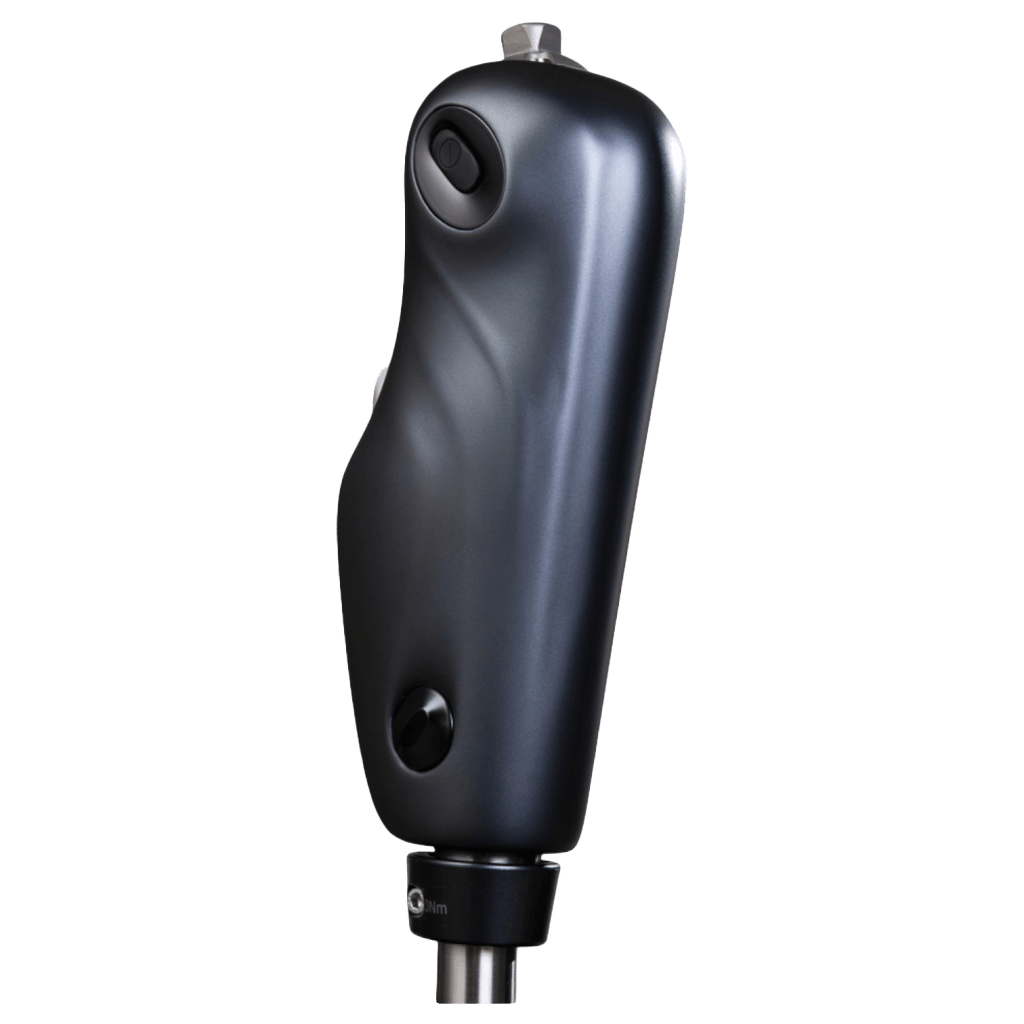
The Kneuro is a hydraulic MPK featuring a strong sensor suite and adaptive algorithms that tune resistance continuously, especially useful during speed fluctuations common in older adults. It is also IP67 waterproof, enabling users to move confidently in rain, snow, or damp environments.
Key Aging-Friendly Features
- 330 lb weight capacity, supporting larger or heavier users not always accommodated by other MPKs.
- Real-time terrain adaptation that automatically adjusts for slopes, grass, gravel, and uneven surfaces.
- Step-over-step stair support that reduces effort and improves safety.
- 5-day battery life minimizes charging burden—important for users with memory or dexterity challenges.
Why It Works Well for Older Adults
Its environmental resilience, higher weight rating, and ease-of-use features make Kneuro a strong match for seniors who value stability but need a durable, low-maintenance solution to meet their broad functional abilities
3. Allux 2 – Nabtesco
Polycentric Mechanical Stability with MPK Intelligence
The Allux 2 stands out as a polycentric (four-bar) microprocessor knee, blending mechanical stability with algorithm-driven hydraulic control. Older adults often benefit from polycentric geometry because it shortens the leg in swing phase, reducing the risk of toe catching.

Key Aging-Friendly Features
- Dual stability concept: polycentric stance security + microprocessor stance management.
- 180° of knee flexion, improving transfers, getting into cars, sitting in tight spaces, and kneeling tasks.
- Smooth hydraulic swing control for variable cadence walking.
- Indications down to low K-level users (K2)—a key group within aging populations.
Why It Works Well for Older Adults
For users who frequently navigate tight indoor spaces or uneven outdoor surfaces, the Allux 2’s mechanical forgiveness and shortened shank in swing phase, combined with MPK responsiveness offers a safe, intuitive feel.
4. Icon – College Park
Lightweight, Easy to Fit, and Highly Responsive
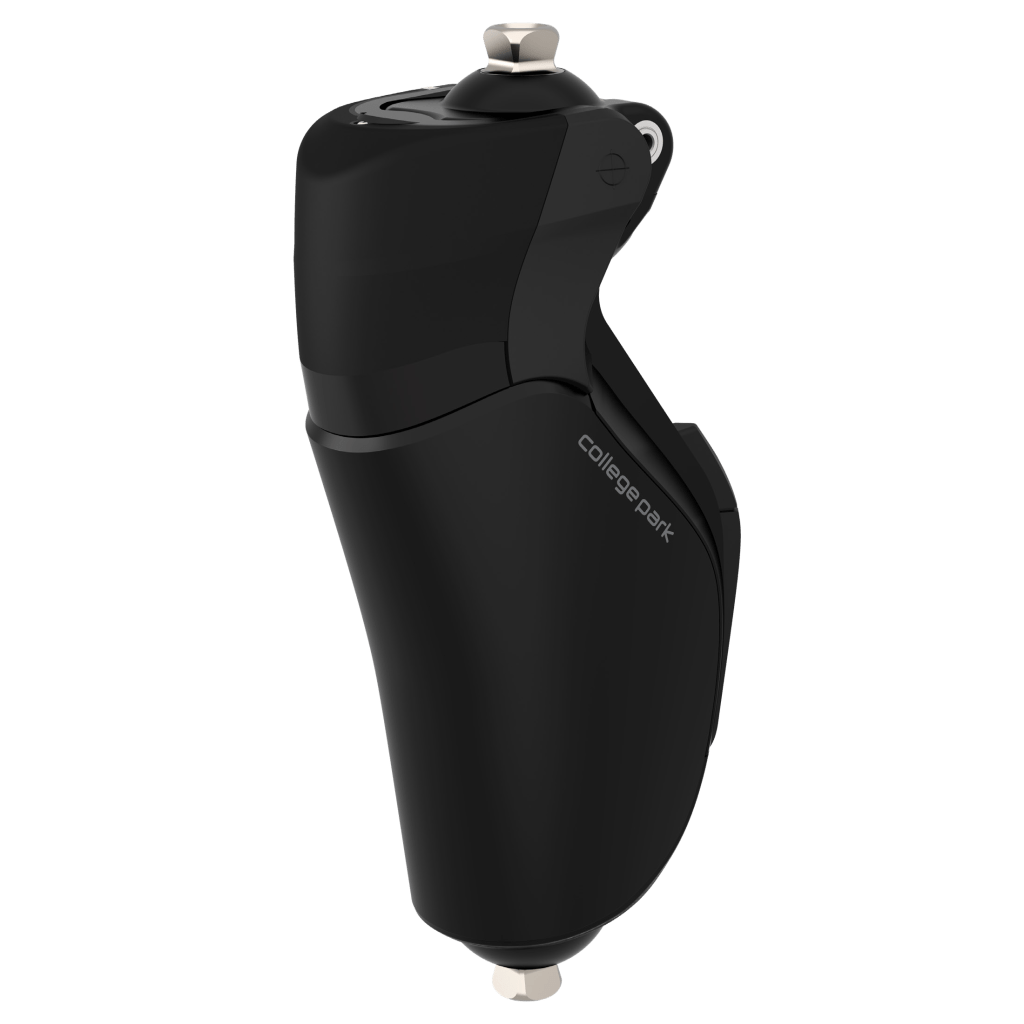
The Icon MPK focuses on fast response time and simplified programming, making it clinician-friendly while offering reliable stability for lower to mid-activity seniors.
Key Aging-Friendly Features
- Quick stance stability activation for users with slower or variable step patterns.
- Stride Studio app allows clinicians to fine-tune settings quickly without installing complex software.
- Lightweight design reduces metabolic effort during walking.
- Designed for K2–K4 activity levels, accommodating the wide functional range of aging prosthetic users.
Why It Works Well for Older Adults
The Icon is particularly appealing in community prosthetic settings that serve diverse senior populations, offering strong stability without unnecessary complexity.
5. Plié – Proteor
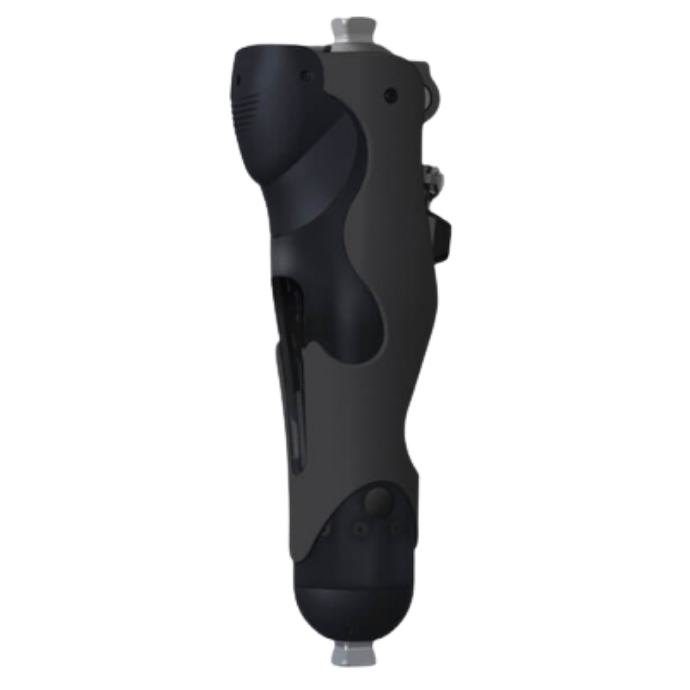
Designed for enhanced mobility, safety, and user customization. Plié’s responsiveness allows patients K2-K4 freedom, stability, and the benefits of a lightweight, easy-to-initiate microprocessor knee and a unique drop-in battery that allows for no downtime and extended functional wear.
Key Aging-Friendly Features:
- Responsive stability and fall prevention
- Adaptability to real-life walking
- Ease of use
- Battery life and convenience
- Support on uneven or challenging surfaces
Why It Works Well for Older Adults
Reduced energy consumption allows for longer active periods and increased mobility. The stability and fall prevention system has a fast response to irregular gait patterns. The Plié also allows for small/short steps to happen while maintaining stability through the knee.
The Big Picture: What Seniors Gain From MPKs:
- Across all five knees, aging users consistently experience: Fewer falls and stumbles
- MPKs respond faster than human reflexes, compensating for slower reaction times: Requiring reduced cognitive load
- The knee handles terrain adjustments so the user doesn’t have to think about every step: Improved endurance and reduced fatigue
- More efficient gait helps users walk farther and stay active longer: Greater confidence outdoors
- Adaptive stance control helps with trails, grass, curbs, ramps, and uneven surfaces: Better participation in life. When mobility feels safe and predictable, seniors engage more in family, community, and recreational activities.
Conclusion
Microprocessor knees are no longer just for high-activity amputees they are now one of the most important tools for fall prevention, safety, and confidence among aging adults. Whether the user needs maximum stability, rugged adaptability, or the ability to meet changing functional levels, modern MPKs meet the diverse needs of older adults with limb loss.
Have questions? Reach out to Leslie Jackson, MSS, CP at ljackson@cascade-usa.com
Learn more and explore all the Microprocessor Knee options Cascade offers by visiting our website or contacting your Cascade Account Manager today!
 Cascade OP Blog